Wellness
5 Common Mistakes When Starting a Meditation Practice (and How to Fix Them)
Most first sits go something like this: you close your eyes, feel calm for about forty seconds, then start wondering whether you left the stove on, whether you're doing it wrong, and whether everyone else finds this easier. Ten minutes later you open your eyes more restless than when you started.
That's not failure. It's the normal entry point. The early weeks of meditation are less about bliss and more about noticing how busy your mind actually is, which is useful information even when it isn't pleasant. The people who stick with it aren't the ones with quieter heads. They're the ones who stopped expecting the practice to behave a certain way. Here are five mistakes that trip up most beginners, and the small adjustments that fix them.
1. Trying to Empty Your Mind
"Clear your thoughts" is the single most damaging instruction in meditation. It sets you up to fail by the second minute. Thoughts arrive; that is what minds do. The skill you're building isn't stopping them, it's noticing when you've been carried off and coming back.
So change the goal. A session with forty wanderings and forty returns is a successful session. Each return is the repetition, the way each push-up is the repetition. Try this simple sequence for a ten-minute sit:
- Settle. Take three slow breaths, letting the exhale run a little longer than the inhale.
- Anchor. Put your attention on one physical sensation — air at the nostrils, the weight of your hands, the sound of the room.
- Notice. The moment you realize you're thinking about tomorrow's meeting, that's the practice working.
- Return. No commentary, no scorekeeping. Just move attention back to the anchor.
- Repeat. As many times as needed until the timer ends.
2. Sitting Longer Than You Actually Want To
Twenty minutes sounds like the "real" amount, so beginners often start there, feel miserable, and quit by Thursday. Five minutes daily beats thirty minutes twice a week, every time. The habit is what carries the practice; the duration can grow later.
A useful rule of thumb: end your sit while you still feel you could continue for another minute. That leaves you wanting to come back rather than relieved it's over. If five minutes feels long, do three. Build to ten, then fifteen, over weeks rather than overnight. Set a timer you don't have to check — watching the clock is its own kind of restlessness.
If you have a health condition, a history of trauma, or pain that flares when you sit still, check with a doctor or mental health professional before making meditation a daily routine. It's a supportive practice, not a treatment for everything.
3. Chasing the Good Session
Some sits feel spacious and quiet. Others are a slog through your to-do list. Beginners tend to read the quiet ones as progress and the noisy ones as regression. It's roughly the opposite of useful.
Pleasant sessions are a byproduct, not the point. The skill you're building is steadiness regardless of what shows up — the same way a good night's sleep isn't the goal of going to bed at the same time each night, it's the likely result. When you start grading sessions, you turn a restful habit into a performance review.
Try this instead: after each sit, jot two lines about what you noticed — "lots of planning," "shoulders tight," "kept drifting to the phone." Describe, don't evaluate. Over a month, those notes will tell you far more about your patterns than any internal scorecard.
4. Waiting for the Right Conditions
You don't need a cushion, a dedicated corner, incense, or a silent house. You need somewhere to sit and a few minutes. Everything else is optional decoration that can quietly become a reason not to start.
What you actually need
- A place to sit — a chair, the floor, a parked car, a seat on the train.
- A timer or a guided track, if you find one helpful.
- Five to twenty minutes you're genuinely willing to give.
- A tolerance for boredom. It shows up, and it passes.
The fix is to attach the practice to something you already do rather than to a mood. After you pour your morning coffee. After you brush your teeth. Before you open your email. A trigger you don't have to negotiate with beats willpower, which is unreliable by design. And if you miss a day, skip the penance — the next sit is the one that counts, not the streak.
5. Changing the Method Every Week
There's no shortage of approaches: breath focus, body scan, guided audio, walking meditation, mantra. They all work. None of them works if you abandon it before it has a chance to settle into your nervous system.
Technique tourism feels productive because you're always learning something new. It's also a very effective way to never build a practice.
Pick one simple method and stay with it for a month. Give it a fair run — at least fifteen or twenty sessions — before you decide. If it's genuinely wrong for you after that, change one thing: the technique, or the length, or the time of day. Not all three at once, or you'll have no idea what helped.
A Practice You Can Actually Keep
If you take one thing from all of this, take the smallest possible version. Choose a single method, sit for five minutes, and attach it to a habit that already exists in your day. Do that for two weeks without changing anything. Then look at your two-line notes and adjust one variable — a few extra minutes, a different time, a chair instead of the floor.
Expect the practice to be ordinary. Some days it will feel like a pause in the noise; other days it will feel like sitting in the noise with your eyes closed. Both are the practice. Show up, return when you drift, and let the results take care of themselves.
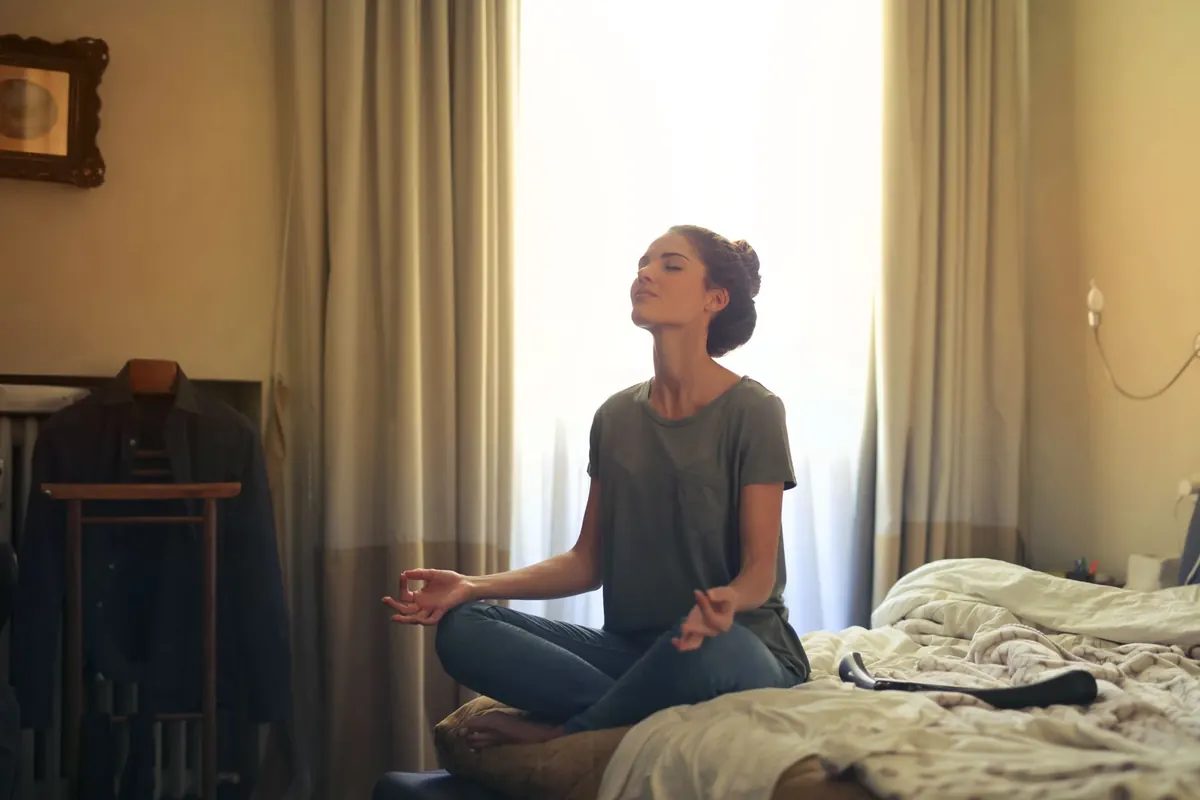
Photo: Andrea Piacquadio / Pexels
Related Articles