Nature
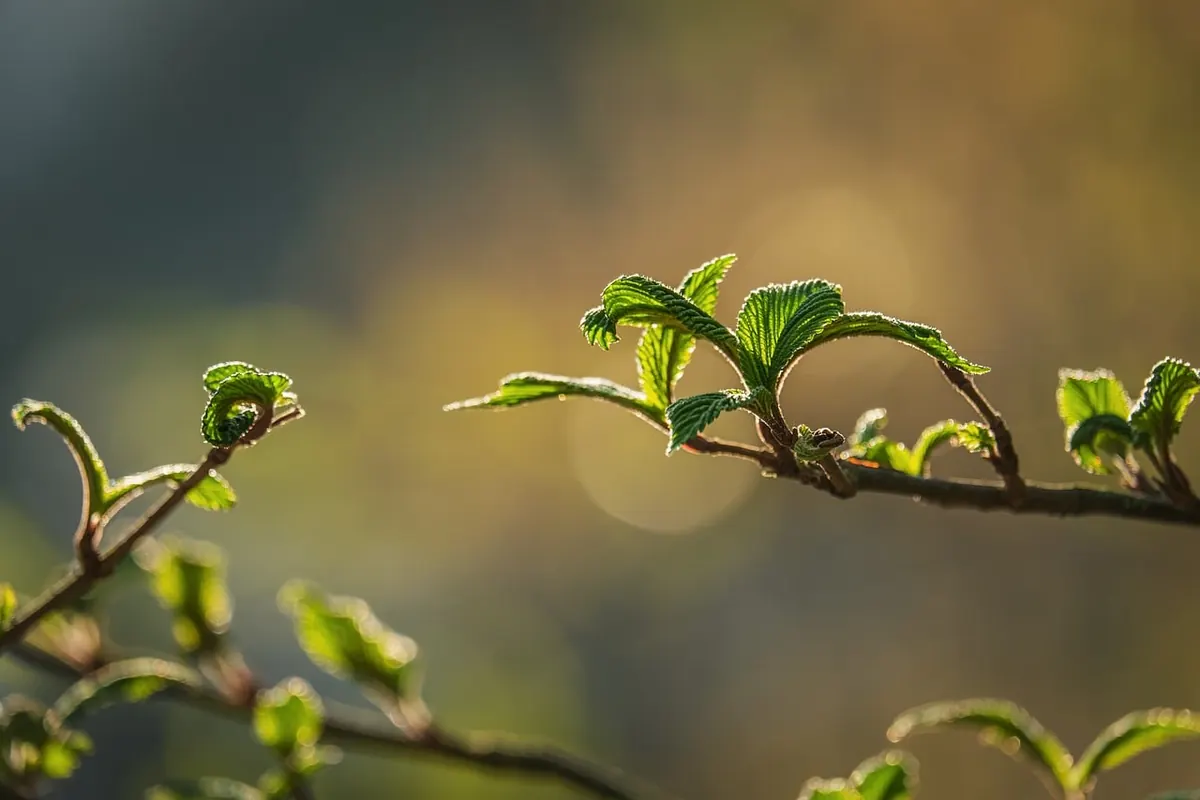
A Beginner's Guide to Identifying Local Trees by Their Leaves
A Beginner's Guide to Identifying Local Trees by Their Leaves
A single leaf can tell you more than you might expect. The shape of its outline, the way its edge is cut, and how it attaches to the twig are clues that narrow the field fast. You do not need a botany degree to read them. You need a few minutes, a willing tree, and the habit of looking closely.
Start with one tree you pass every day. Learn its leaf, then compare the next tree to it. Identification gets easier when you build from the familiar outward.
First, Separate Needles from Broad Leaves
Most local trees fall into two broad groups. Conifers—pines, spruces, firs, cedars, and their relatives—have needles or scale-like leaves. Broadleaf trees have flat, often wider leaves that may be simple or compound. If you are holding a needle, count how many grow in a bundle and how long it is. White pine usually carries five needles in a bundle; red pine often carries two; spruce needles grow singly and feel square and sharp; fir needles grow singly, look flatter, and are usually softer to the touch. If you are holding a broad leaf, the rest of this guide applies.
One quick check: a leaf has a bud at the base where it meets the stem. A leaflet does not. This matters because a single compound leaf can look like a whole branch of small leaves. Find the bud, and you will know what you are counting.
Study the Shape
Shape is the first strong clue for broadleaf trees. Look at the entire outline before you worry about the edge. Is it roughly oval, heart-shaped, triangular, or fan-shaped? Does it have deep lobes, like a maple or an oak, or is it smooth and unbroken, like a beech or a magnolia?
Simple or Compound?
A simple leaf has one blade. A compound leaf is divided into separate leaflets, all attached to one central stalk. Ash, walnut, hickory, and sumac have compound leaves. Maples, oaks, birches, and elms usually have simple leaves. Compound leaves can be palmately arranged, like fingers on a hand, or pinnately arranged, like feathers on a stem. When you find a leaf that looks compound, check the base of the stalk. If there is a single bud where the stalk meets the twig, the whole structure is one leaf. If each small blade has its own bud, you are looking at simple leaves growing along a twig.
Lobes and Outline
Maple leaves are palmate, with lobes spreading from one point. Oak leaves vary widely: some have rounded lobes, some have pointed bristle-tipped lobes, and some have smooth edges with no lobes at all. Sweetgum has a star-shaped leaf. Tulip tree has a distinctive four-lobed shape that looks like a tulip flower. Sassafras is famous for offering three shapes on one tree: an oval leaf, a two-lobed mitten, and a three-lobed ghost. Learn these few, and you will start noticing the exceptions.
Read the Edges
The margin of a leaf—its edge—is another reliable clue. Run a fingertip gently along it, or hold it up to the light. An entire edge is smooth, with no teeth or notches. A serrated edge has teeth, like a saw. A double-serrated edge has teeth on teeth, which is common in elms. A lobed edge has rounded or pointed sections that cut inward, as in many oaks and maples.
Teeth can be fine or coarse, regular or irregular. Birch and cherry often have fine teeth. Some willows have tiny teeth and long, narrow leaves. Holly leaves may be spiny, while beech leaves are usually smooth-edged and have a clear, straight vein pattern. Do not rely on one leaf. Look at several from the same tree, because sun leaves and shade leaves can differ.
Check the Arrangement
Arrangement is one of the most useful clues because it splits trees into neat groups. Look at how leaves attach to the twig. Alternate leaves attach one at a time, first on one side, then the other, usually in a spiral. Opposite leaves attach in pairs at the same point on the twig, with the next pair often crossing at right angles. Whorled leaves attach three or more at a single point, like spokes on a wheel.
This single check can eliminate many possibilities. In many temperate regions, most trees have alternate leaves, while only a minority have opposite leaves. Maples, ashes, dogwoods, buckeyes, and horse chestnuts are common opposite-leaved trees. If you find a leaf that is opposite and compound, your short list might include ash or box elder. If it is opposite and simple, think maple or dogwood. If it is alternate and compound, think walnut, hickory, or sumac. If it is alternate and simple with lobes, think oak. Always confirm with shape, edge, and habitat before you settle on a name.
Alternate, Opposite, or Whorled?
Examine several twigs from the same tree. The pattern should stay consistent. On opposite twigs, buds and leaves sit across from each other like partners in a dance. On alternate twigs, the leaves zigzag along the stem. On whorled twigs, the leaves circle the stem at one node. If you are unsure, step back and look at the whole branch. The pattern is often easier to see from a distance than with your nose against the bark.
Use Smell, Texture, and Sap as Backup Clues
Leaves can offer more than shape. Crush a leaf gently and smell it. Sassafras has a spicy, root-beer-like scent. Walnut leaves are aromatic in a sharp, clean way. Black cherry twigs, when scratched, may smell faintly of almond. Magnolia leaves are thick and leathery, often with a rusty or silvery underside. Tulip tree leaves are smooth and square-tipped. Oak leaves tend to feel leathery; maple leaves are thinner and more delicate.
Use these clues as backups, not as your first test. Some scents are subtle, and some plants can irritate skin, so avoid tasting anything and wash your hands after handling unknown plants. A hand lens helps with tiny hairs, glands, and vein patterns, but your eyes and fingertips will carry you a long way.
Make a Simple Field Routine
When you meet a new tree, run through the same short checklist every time. It keeps you from jumping to a guess too soon.
- Decide whether the tree has needles or broad leaves.
- Check the arrangement: alternate, opposite, or whorled.
- Decide whether the leaf is simple or compound.
- Study the outline: oval, heart-shaped, lobed, fan-shaped, or star-shaped.
- Read the margin: smooth, serrated, double-serrated, or lobed.
- Look at the underside, veins, smell, and texture.
- Note the habitat and season, then compare your clues with a field guide or local tree list.
With practice, these steps take less than a minute. You will begin to recognize patterns rather than memorizing isolated facts. A maple leaf, an oak leaf, and an ash leaf stop looking like a random collection of green shapes and start looking like members of families with their own rules.
Identify one tree well, and you gain a reference point for every tree you meet afterward. The goal is not to know every name at once. The goal is to look closely enough that the next leaf has something to say.
Photo: Couleur / Pixabay
Related Articles