Reflections

The Sunday Reset: A 30-Minute Reflection Ritual for a Calmer Week
Sunday evening has a reputation problem. By the time it arrives it carries the weight of everything you didn't finish, plus a low hum of dread about everything coming. But those hours can also hold the quietest half hour of your week — a small pocket of time that belongs to nobody else. That is the Sunday reset: thirty minutes, a few plain questions, and a version of Monday that feels less like a collision and more like a deliberate step.
It is not a productivity system, and it will not reorganise your life. It is a ritual, which means it works best when it is small, repeated, and slightly boring.
Why Thirty Minutes Is the Point
Most weekly planning fails because it is ambitious. You block out two hours, spread papers across the table, build an elaborate colour-coded plan, and never do it again. The constraint is the feature. Thirty minutes is short enough to fit into a Sunday that already has laundry in it, and long enough to actually think.
Rituals also spare you decisions. If the time, the chair and the drink stay roughly the same, the only thing left to decide is what to write. That's a much smaller ask of a tired brain at 8pm.
Set the Scene in Three Minutes
Before any reflection happens, make the room cooperate. A few things help more than they should:
- Phone face down in another room, or at least out of arm's reach. Checking it once defeats the whole point.
- A notebook and a pen you like. Paper, not an app — you think differently when you can't delete a sentence.
- One warm drink, made before you sit down so you aren't getting up in four minutes.
- A timer set for thirty minutes. The timer is what lets you stop.
- One light on, not the whole ceiling. Softer rooms produce softer thinking.
That's it. No candles required, no playlist. If setup takes longer than the ritual, you've built the wrong ritual.
Minutes 1–10: Look Back Without Grading Yourself
Open your calendar and skim the week you just had. Then answer three questions in fragments, not sentences:
- What actually happened? Just the facts — meetings, errands, the thing you cancelled.
- What gave me energy? Could be a conversation, a walk, a project that finally moved.
- What drained it? Be specific. "Tuesday" is not specific. "The two-hour call with no agenda" is.
The trap here is turning this into a performance review. You are not scoring the week; you are noticing patterns. If you find yourself writing the word "should," cross it out. What you're after is one honest observation: I do better when I leave the house before ten, or I said yes to too many things on Thursday.
Write down one thing that went right, even if it was minor. A week reviewed only for its failures is a week you will start avoiding.
Minutes 10–20: Choose Three Anchors, Not a Task List
A long list of tasks will be obsolete by Tuesday lunchtime. Instead, choose three anchors for the week ahead — three things that, if they happen, mean the week went reasonably well.
A useful shape for the three:
- One thing that must move. The deadline, the appointment, the decision you've been circling.
- One person to reach out to. A friend, a colleague, a family member you keep meaning to call.
- One thing that would make the week feel good. Not productive — good. Dinner that isn't rushed. A run. Two hours with a book.
Then scan the week for friction. Where are the two things that will collide? What could you move now, while it's cheap to move? Is there anything you can decline this week rather than carry it to Friday? Naming one thing to drop is often more useful than naming three things to add.
If a worry on your list is medical or financial, the right action is usually a phone call to someone qualified, not more thinking. Put "book the appointment" on the list and let it go until Monday.
Minutes 20–27: Clear One Surface
Now do something physical, and keep it small. Pick one surface — the kitchen table, your desk, the chair that has become a wardrobe — and clear it. Not the whole house. One surface, seven minutes, timer running.
This is not about tidiness for its own sake. Visual clutter is a low-grade interruption; every time you walk past the pile of papers you spend a fraction of attention on it. Clearing one surface gives you a place to put your coffee on Monday morning and a small, visible piece of evidence that you did something.
If You Live With Other People
Claim a shared surface and the task doubles. Ask for seven minutes of help, or choose a surface that is yours alone — a bedside table, a corner of a desk. The ritual should not become a household negotiation.
Minutes 27–30: Name the Week
Close by writing one sentence. Not a goal, not a mantra you'd print on a poster — an intention you can actually remember on Wednesday afternoon. Some that work:
One hard thing at a time.
Slow mornings, honest answers.
Ask before assuming.
Keep it under ten words. Read it once. Close the notebook. The timer goes off; you're done. Anything still swirling can wait until next Sunday, and most of it will have resolved itself by then.
When You Skip a Week
You will skip weeks. Travel, illness, a Sunday that runs until midnight. The rule is simple: skipping is allowed, quitting is optional. A missed Sunday does not need to be made up with a longer session or an apology.
If Monday morning arrives and you never had your thirty minutes, take five of them at your desk before the first meeting. Two questions: What matters most this week? and What am I worried about? Write the answers down. That's a reset, just a compressed one. The habit survives on the five-minute version.
Your First Sunday Reset
Put thirty minutes in your calendar for this coming Sunday evening, somewhere between dinner and bed, when the day has already slowed down. Set the timer. Work through the three movements — look back, choose three anchors, name the week — and clear one surface on your way out.
The goal is not a perfectly planned week. It's arriving at Monday knowing what you're walking into, with one sentence in your head and a clear table to sit at. Thirty minutes of calm, repeated most weeks, will do more for how the week feels than any system that takes an afternoon to build and two weeks to abandon.
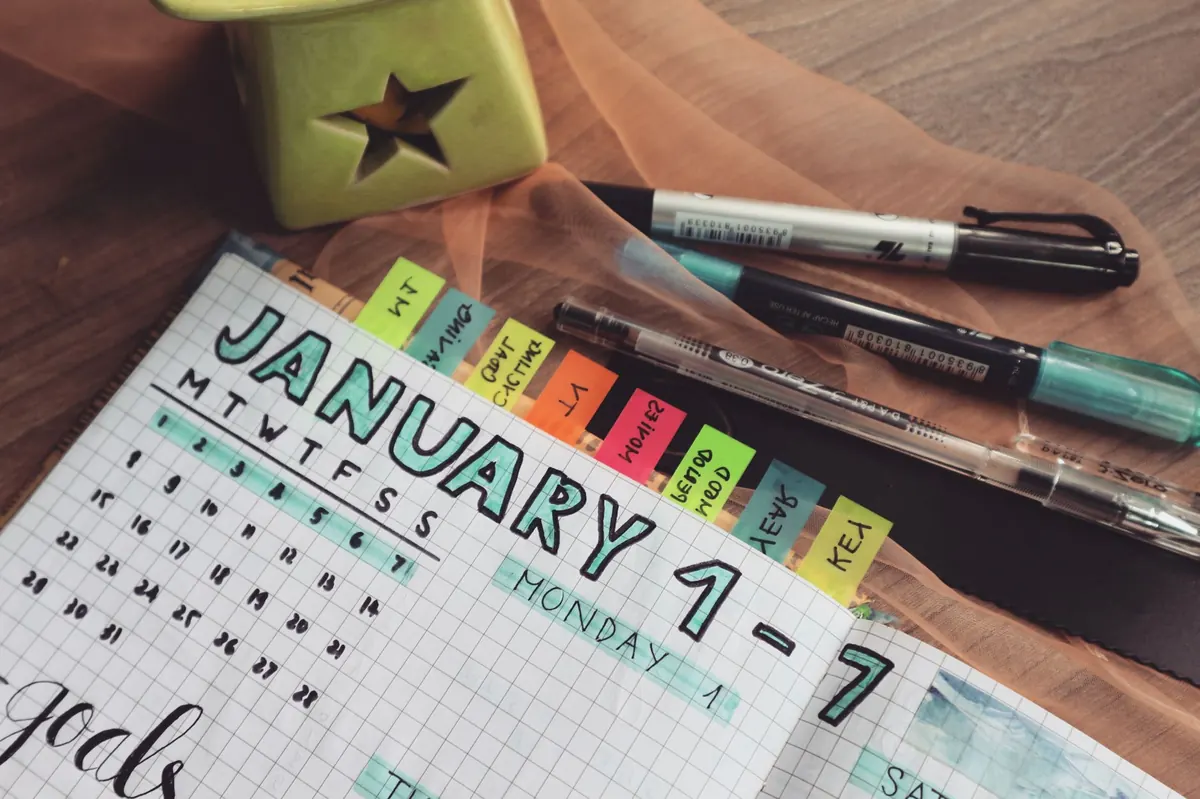
Photo: JillWellington / Pixabay
Related Articles