Wellness
Beginner's Guide to Morning Stretching: A 15-Minute Routine for Stiff Bodies
Most mornings, your body doesn't ask for much. It asks you to move before you sit down at a desk, before you check your phone, before you spend eight hours folding yourself into the shape of a chair. That's the whole idea behind a morning stretching routine. It is not about becoming flexible enough to do a split. It is about taking a stiff, creaky, half-awake body and reminding it that it works better when it moves.
Fifteen minutes is enough. If you have five, that works too, but fifteen gives you room to cover the places that usually complain first: the neck, the shoulders, the lower back, the hips, and the backs of the legs. Nothing here requires experience, equipment, or a level of fitness you don't already have.
What Morning Stretching Actually Does
Through the night, you stay in roughly the same few positions for hours. Fluid settles, tissue stiffens, and your nervous system shifts into rest mode. Standing up and moving around reverses that, but slowly. Gentle stretching speeds it up.
You'll notice the difference in how you feel, not in a number. A hip that felt locked when you got out of bed usually moves more freely after thirty seconds of attention. A neck that was tight while you made coffee tends to loosen once you've spent a couple of minutes on it. That's a reasonable goal, and it happens most days.
Two honest notes. First, stretching feels good but is not a cure for an injury, and it will not fix a problem that needs actual treatment. Second, the routine below is general advice, not medical advice. If you have a condition, a recent injury, or pain that concerns you, check with a doctor or physiotherapist about what suits you.
Three Ground Rules Before You Begin
- Move a little first. Spend sixty to ninety seconds walking around the room, rolling your shoulders, or getting out of the shower. Stretching cold tissue is uncomfortable and unnecessary.
- Never bounce. Hold a stretch steady and let it settle. Bouncing triggers a protective reflex that makes muscles tighten rather than relax.
- Breathe out into the stretch. If you're holding your breath, you're pushing too hard. Back off until the breath comes easily.
One more thing worth knowing: many teachers suggest keeping the first stretch of the day gentle rather than diving into deep, forceful forward bends in the first hour after waking, when your spine is still settling into the day. Slow and easy works better in the morning than ambitious.
The 15-Minute Routine
Do the sections in order. Move slowly, hold each position for twenty to thirty seconds, and repeat on both sides.
Minutes 1–3: Breathe and Wake the Neck
Sit on the floor or in a chair with a tall spine. Take five slow breaths through your nose, letting your ribs expand sideways rather than lifting your shoulders. Then tilt your right ear toward your right shoulder and stay for twenty seconds, feeling the stretch along the left side of your neck. Switch sides.
Finish with eight slow shoulder rolls in each direction. Don't roll your head backwards in a full circle; it's an awkward angle for the neck and rarely feels good.
Minutes 4–7: Shoulders, Chest, and Spine
Come onto all fours for cat-cow. On an inhale, drop your belly and lift your chest and tailbone. On an exhale, round your spine and tuck your chin. Move through eight slow rounds, matching the movement to your breath.
Then lie on your right side with knees bent and arms stacked in front of you. Sweep your top arm open to the left, following it with your gaze, and let your chest rotate toward the ceiling. Stay for five breaths. Repeat on the other side.
Finish with child's pose: knees wide, hips back toward your heels, arms stretched forward. Forty-five seconds here, breathing into your back.
Minutes 8–11: Hips and Legs
From all fours, bring your right foot forward and your left knee back, then shift your weight gently forward until you feel the front of your left hip open. Thirty seconds, then switch.
Next, lie on your back and cross your right ankle over your left thigh, drawing both legs toward your chest. Hold for thirty to forty-five seconds per side. This one tends to reach the outer hip and lower back.
End the section sitting with legs extended and knees softly bent. Hinge forward from the hips rather than rounding hard from the waist, and hold for forty-five seconds.
Minutes 12–15: Hamstrings, Calves, and a Quiet Finish
Stand and place one heel on a low step or the edge of a stair. Keep that leg mostly straight, hinge forward slightly, and hold thirty seconds per side. Then face a wall, hands at chest height, step one foot back, and press that heel toward the floor for a calf stretch, thirty seconds each side.
Lie on your back and either bring your knees to your chest or rest your legs up a wall. Stay for a minute or two. This is the part people skip and the part that makes the whole routine feel complete.
How to Make It Stick
Consistency matters more than how deep you go. A few practical moves:
- Leave your mat unrolled where you'll walk past it. Out of sight, forgotten by Thursday.
- Attach the routine to something you already do. After brushing your teeth, before the first coffee.
- Keep the same order for two weeks. Decisions are friction; a fixed sequence removes them.
- Have a three-minute version for busy mornings: neck, cat-cow, hip flexor, legs up the wall.
- Track it loosely. A tick on a calendar is enough to show you whether it's becoming a habit.
Beginner Mistakes to Skip
Chasing the deepest version of a stretch is the most common one. A mild pull is the target; sharp pain is a signal to ease off. Comparing your range to someone else's is pointless, since bone structure and joint shape vary from person to person and have nothing to do with effort. Holding your breath, rushing through positions, and only stretching on days you already feel stiff round out the list.
If you feel numbness, tingling, or pain that shoots down a limb, stop that movement and mention it to a healthcare professional rather than working through it.
Your First Morning
Tomorrow, set out a mat or a towel before bed. When you wake, walk around for a minute, take five slow breaths, then work through the neck, spine, hips, and hamstrings at whatever pace feels comfortable. Finish with two minutes flat on your back.
You won't finish feeling like a different person. You'll feel looser, warmer, and a bit more willing to start the day. That's the point, and it's enough to bring you back tomorrow.
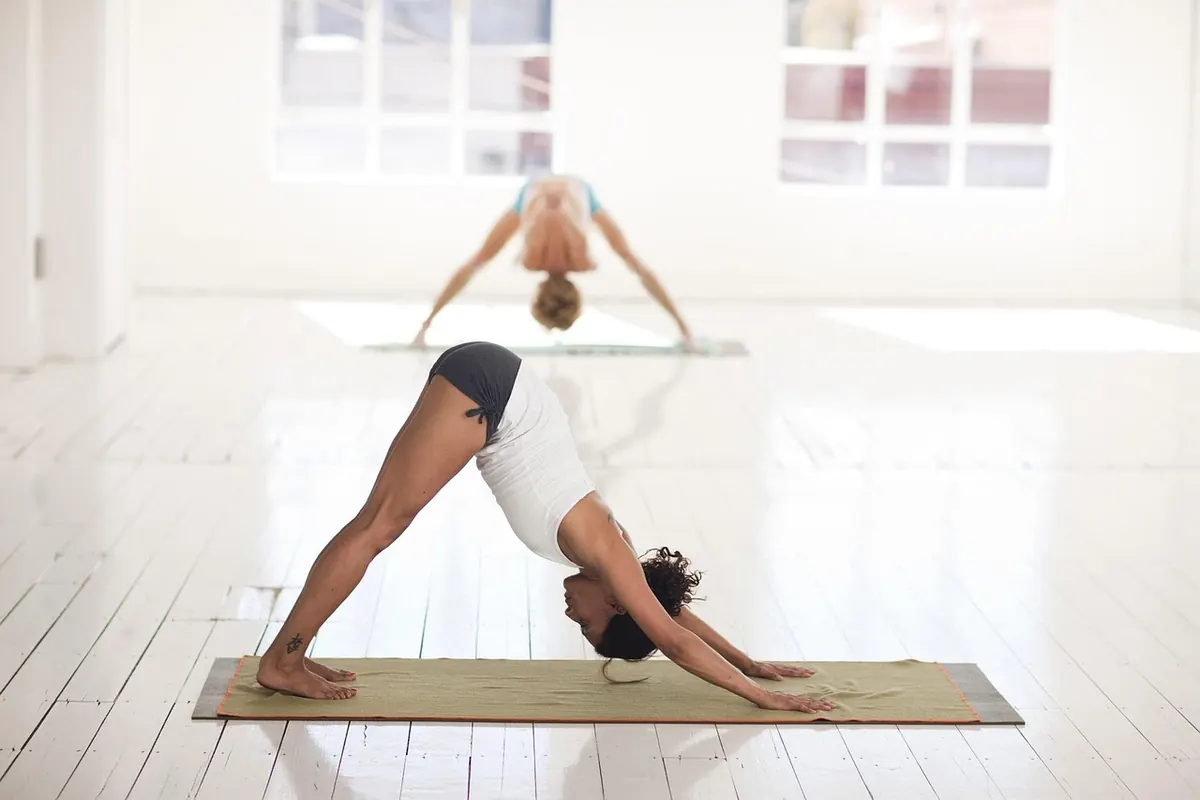
Photo: AndiP / Pixabay
Related Articles